

What a green facade really delivers.
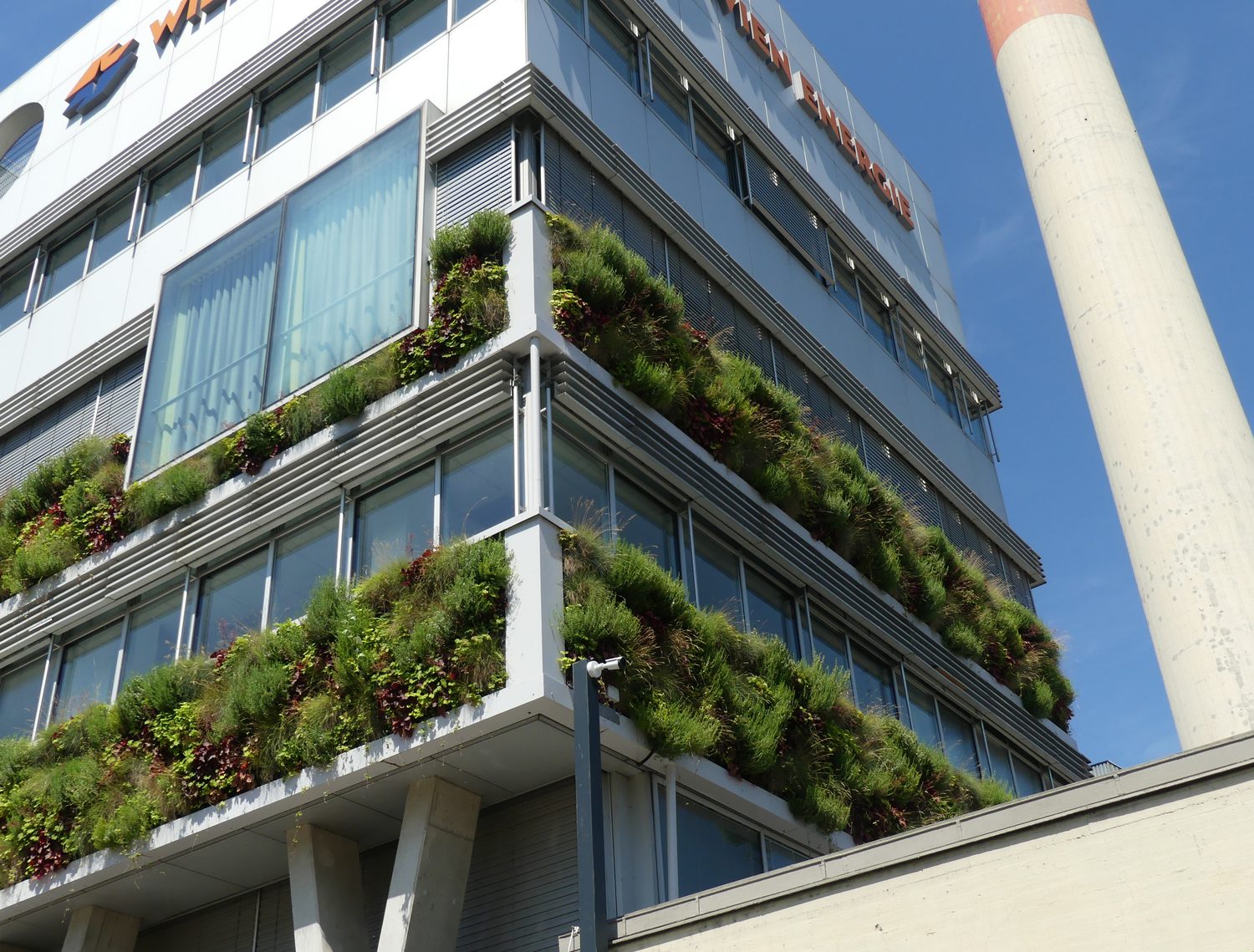
No brochure figures: all cooling and radiation values for LivingPANELS were measured in scientific research projects, including HEDWIG at the Wien Energie Simmering reference building – the raw data is publicly available.
What greening does for buildings.
Plants cool through evapotranspiration and shading. All of the following values were measured at the Wien Energie Simmering reference building in the independent HEDWIG research project (BOKU/IBO) and are publicly documented.
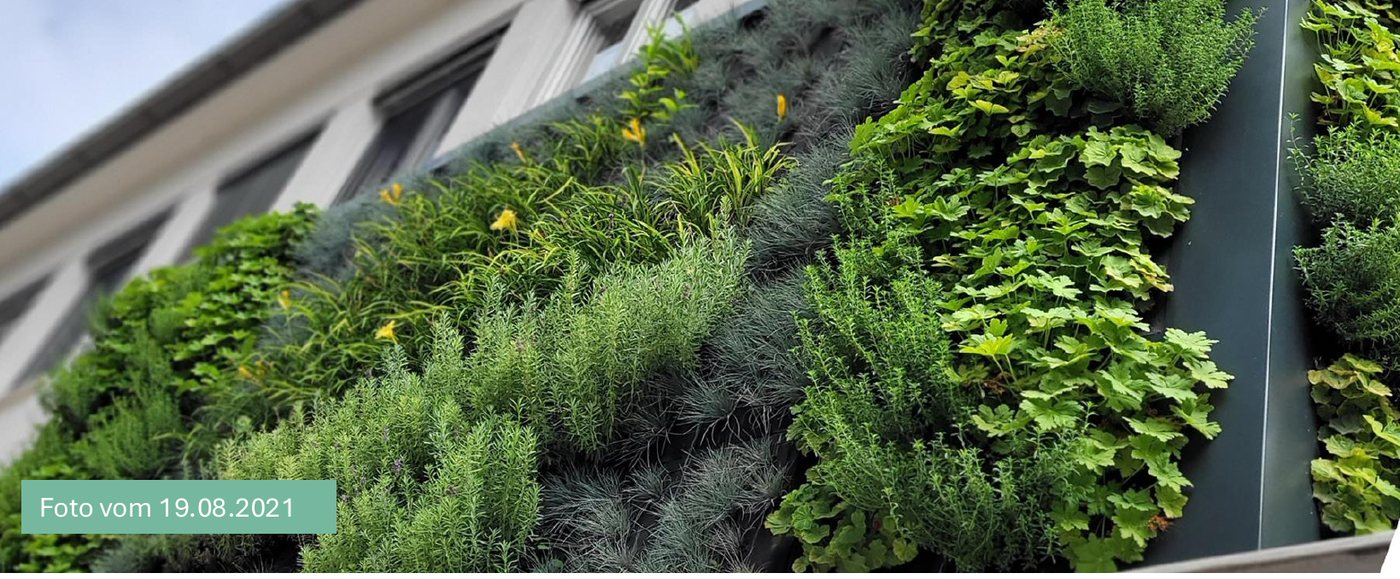 Measurement site FB3-m · Wien Energie Simmering · since 2021
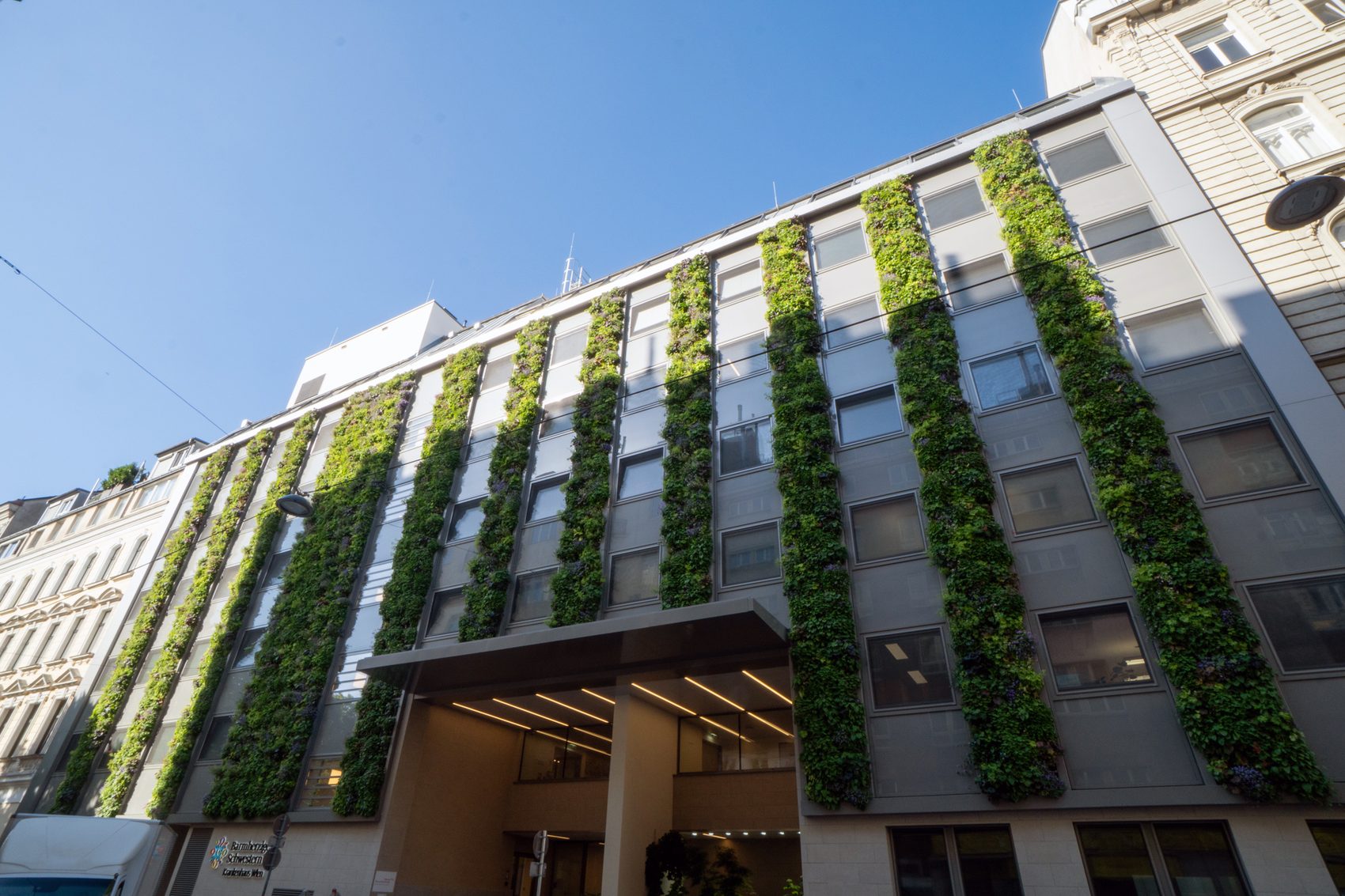 Evapotranspiration and shading act on the facade
Measured in the research projects HEDWIG (Berichte aus Energie- und Umweltforschung 59a/59b/2026, Wien Energie Simmering reference building, measurement site FB3-m) and MARGRET (61/2026, AEE INTEC test rig with an unplanted reference facade), funded by the BMIMI. The values apply to the buildings investigated and depend on system build-up, vegetation and plant composition, exposure, location and season; they presuppose professional maintenance and irrigation in line with ÖNORM L 1136. Bernhard Scharf (NatureBase) contributed to HEDWIG as co-author. HEDWIG reports · MARGRET report · Raw data (Zenodo)
Green facades in general:
measurable benefits.
Heat has become a real danger in Europe – around 47,700 heat-related deaths in 2023. Green facades cool, clean the air, dampen noise and create habitat for insects, wild bees and birds – on the largest unused surfaces in the city.
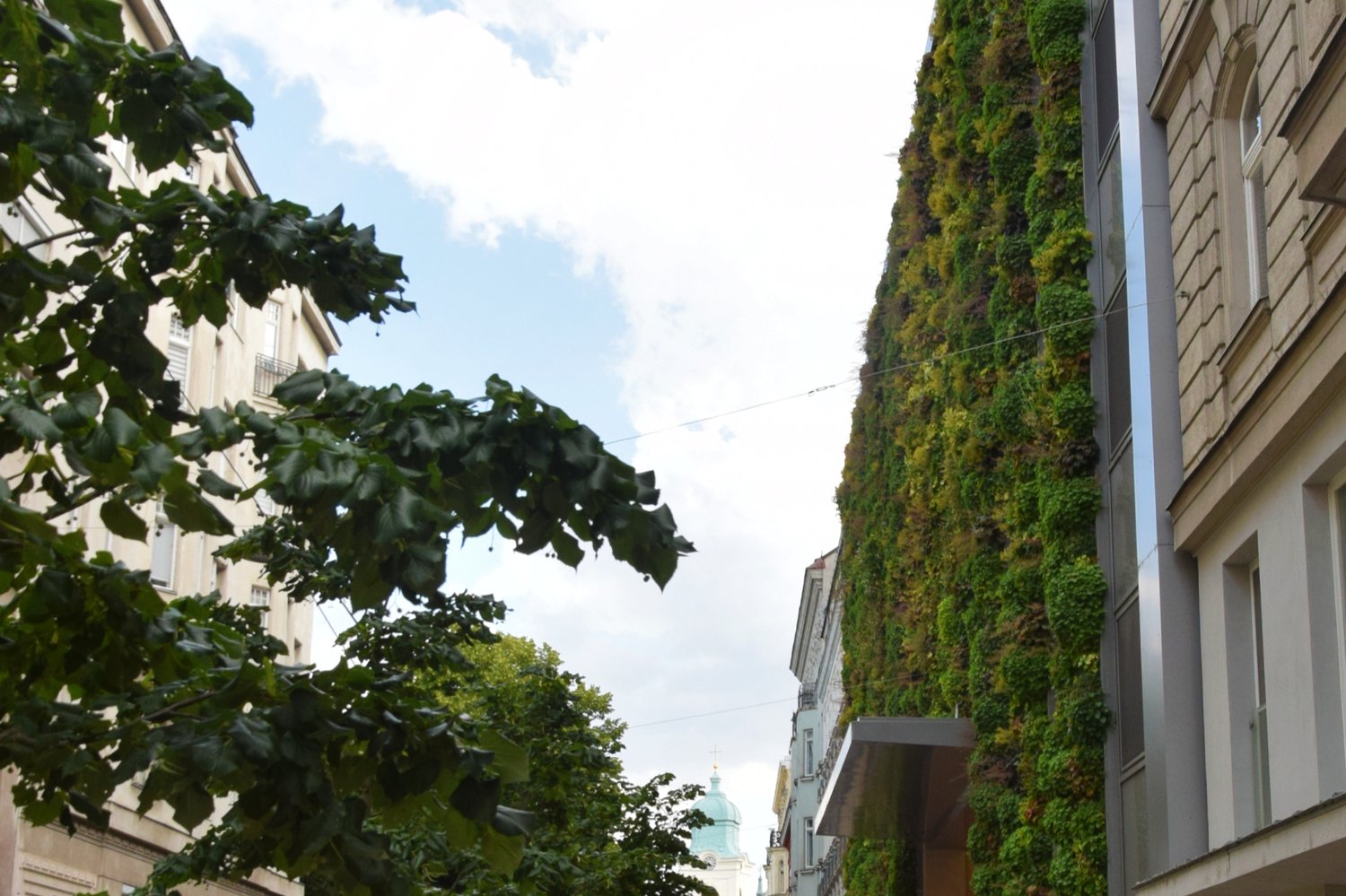 Barmherzige Schwestern · Vienna · 260 m²
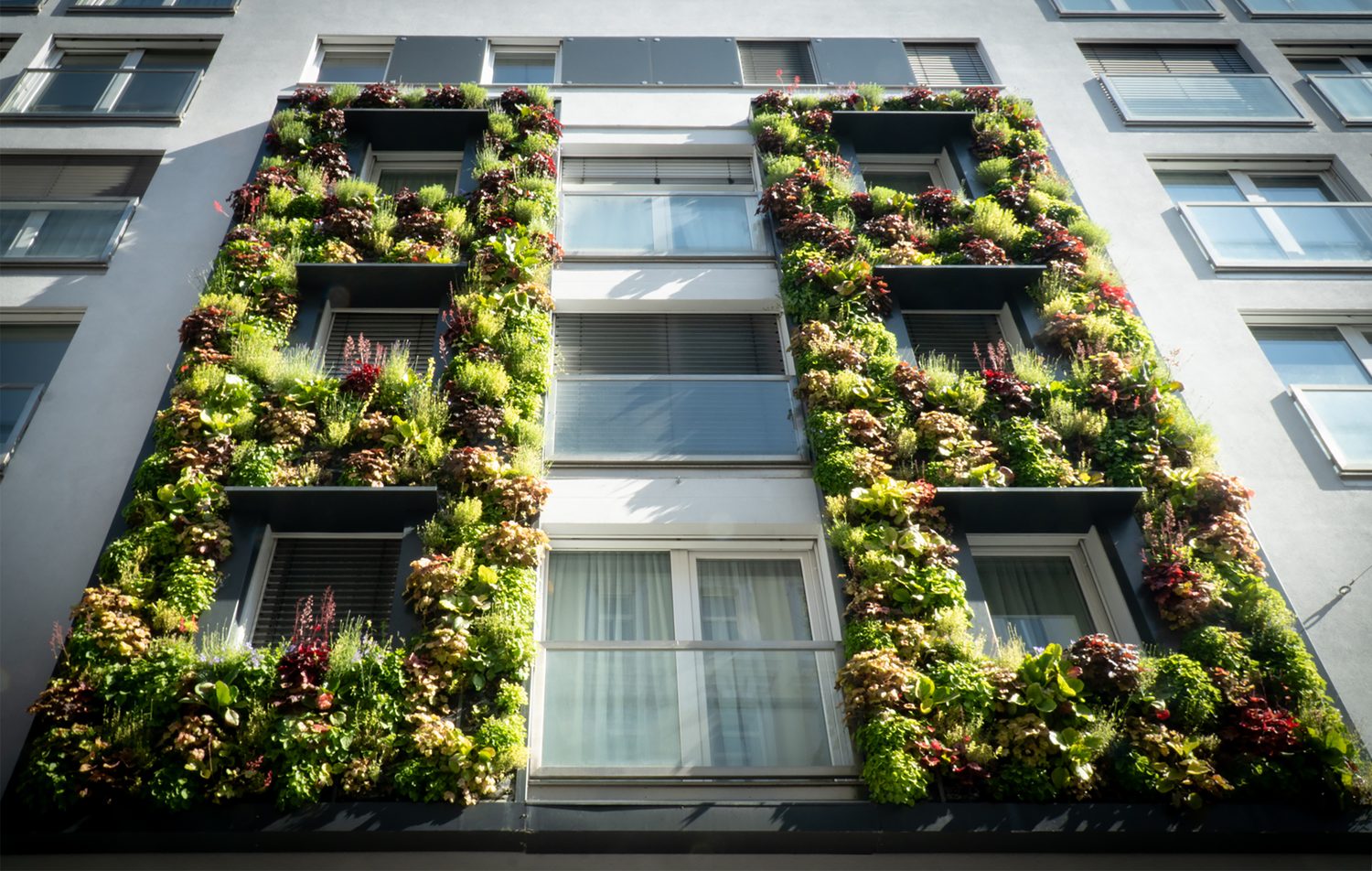
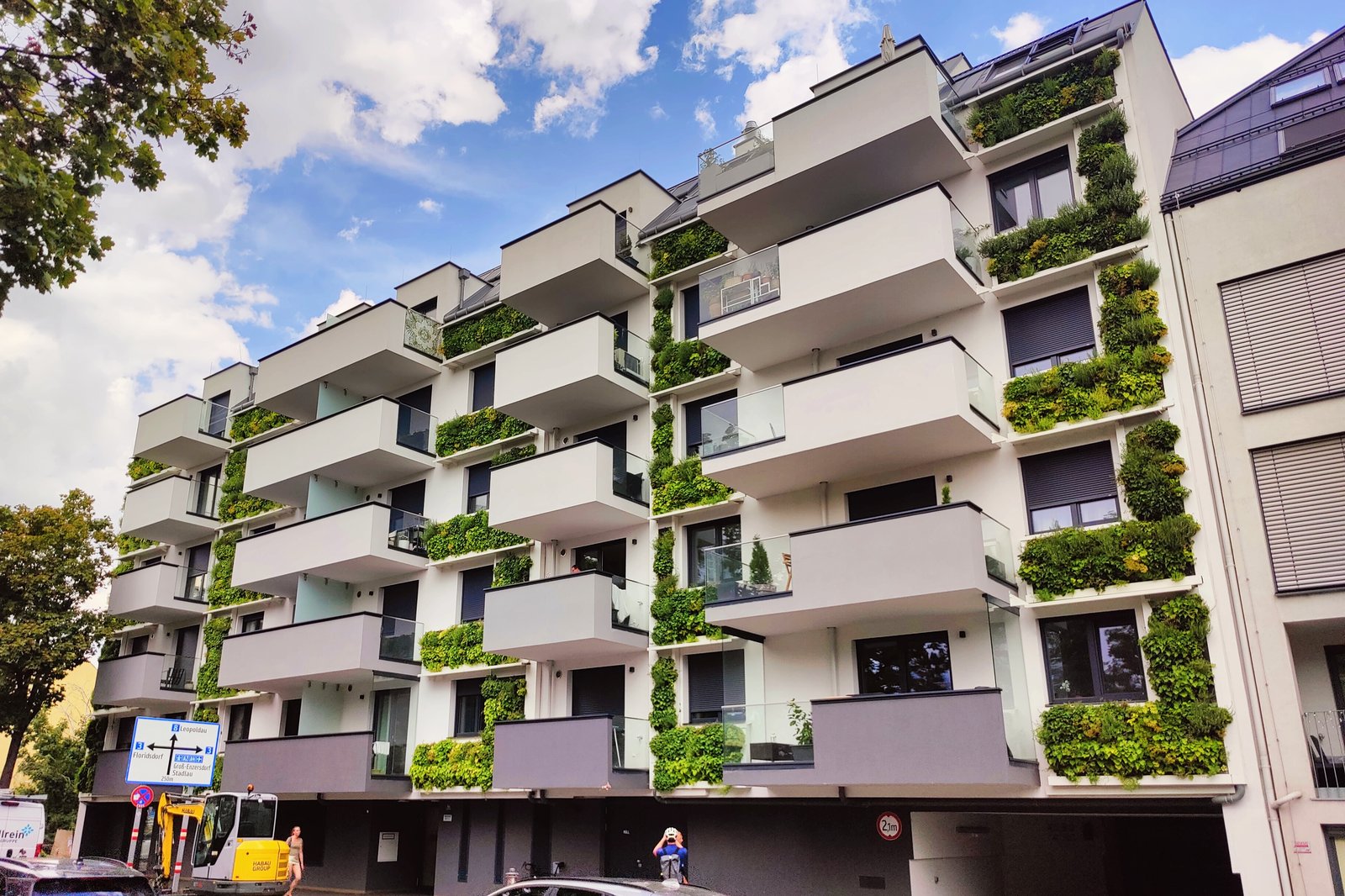 Wagramer Straße residential building · Vienna
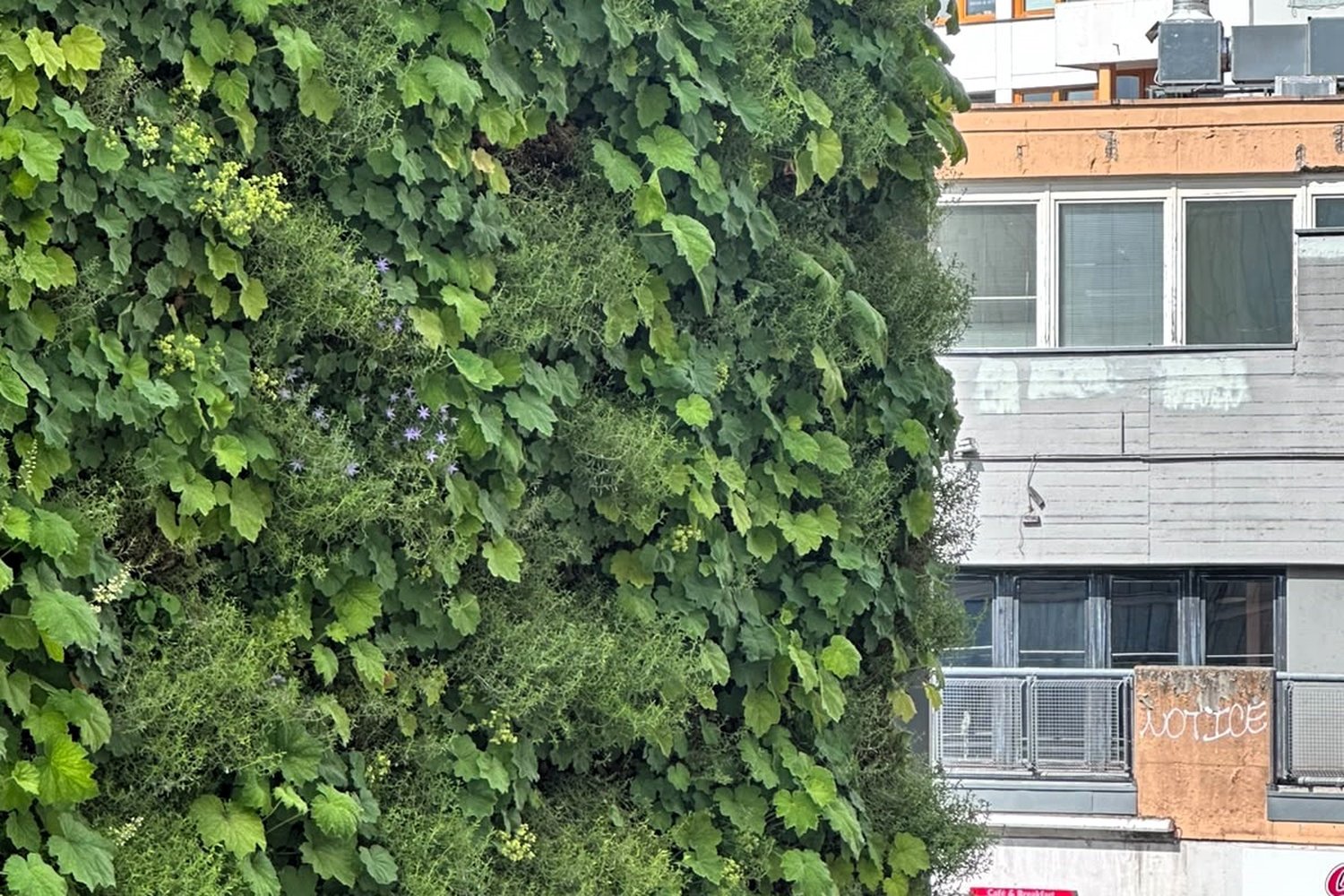 Mittelpunktbibliothek · Berlin
Independent research on facade and building greening (general values, not system-specific; dependent on location and building). Sources: GRÜNSTATTGRAU/BuGG “Positive Wirkungen von Gebäudebegrünungen” (2021); ISGlobal, “Nature Medicine” (2024); AGES.
Impact beyond the building.
Five questions property developers, planners and businesses ask us most often – and what the evidence says.
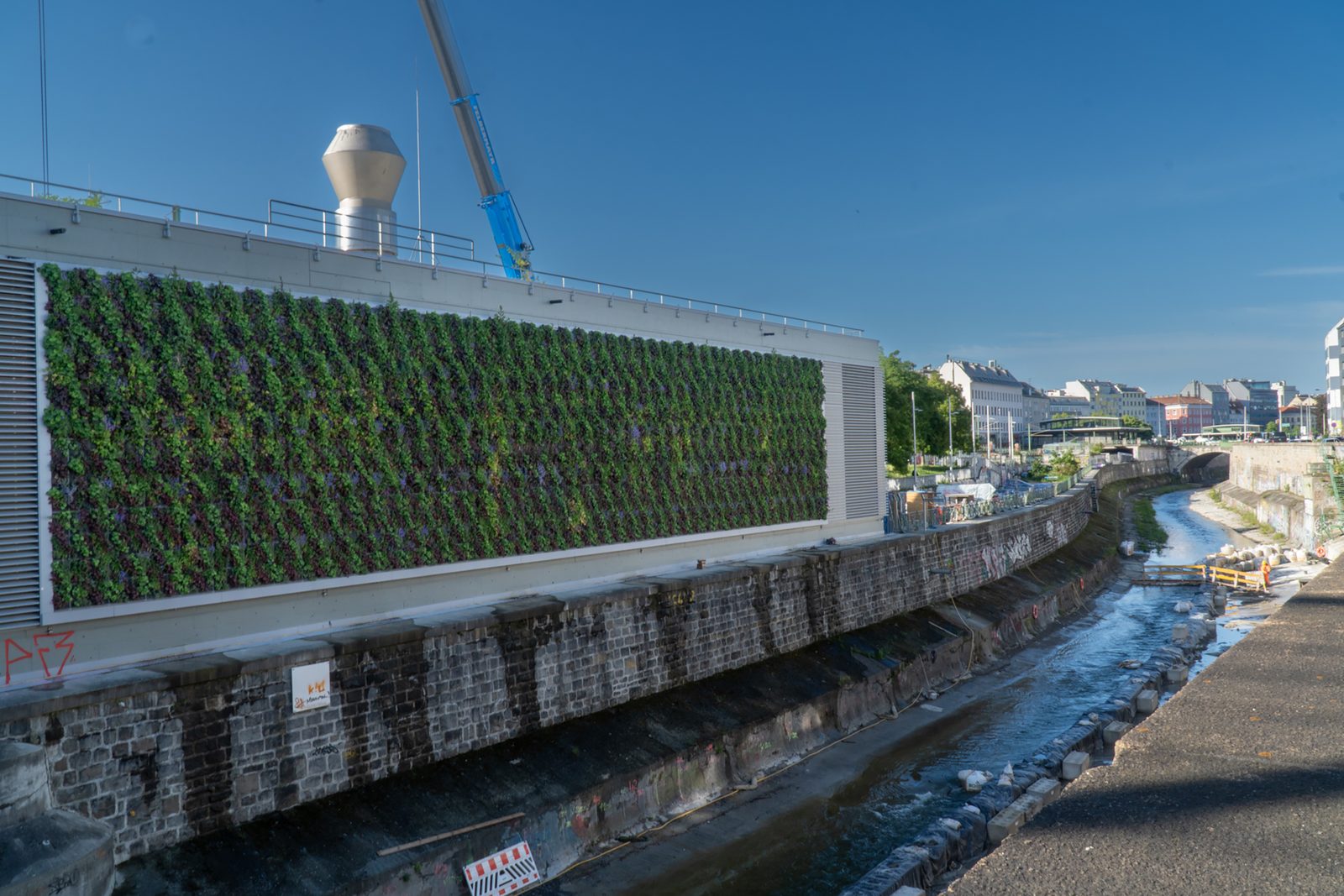
Urban heat island
Between 1961 and 1990 Vienna averaged 9.5 hot days per year; between 1991 and 2022 it was 21.6.¹ In densely built districts, concrete, asphalt and masonry store heat and release it at night – the difference to the surrounding countryside can reach 12 °C at night.¹
Green facades act exactly there: they shade the wall, evaporate water and keep the surface 9–16 °C cooler than sheet metal or masonry.² Less stored heat, less radiation into the night.
Impact on people
Heat is a health risk: around 47,700 heat-related deaths in Europe in 2023.³ Greening cools the air at street level, filters dust and NO₂ and dampens noise.⁴
Then there is the view of greenery: patients with a view of trees instead of a wall left hospital earlier and needed less potent painkillers.⁵ 84 % of residents of greened buildings view the facade greening positively.⁴
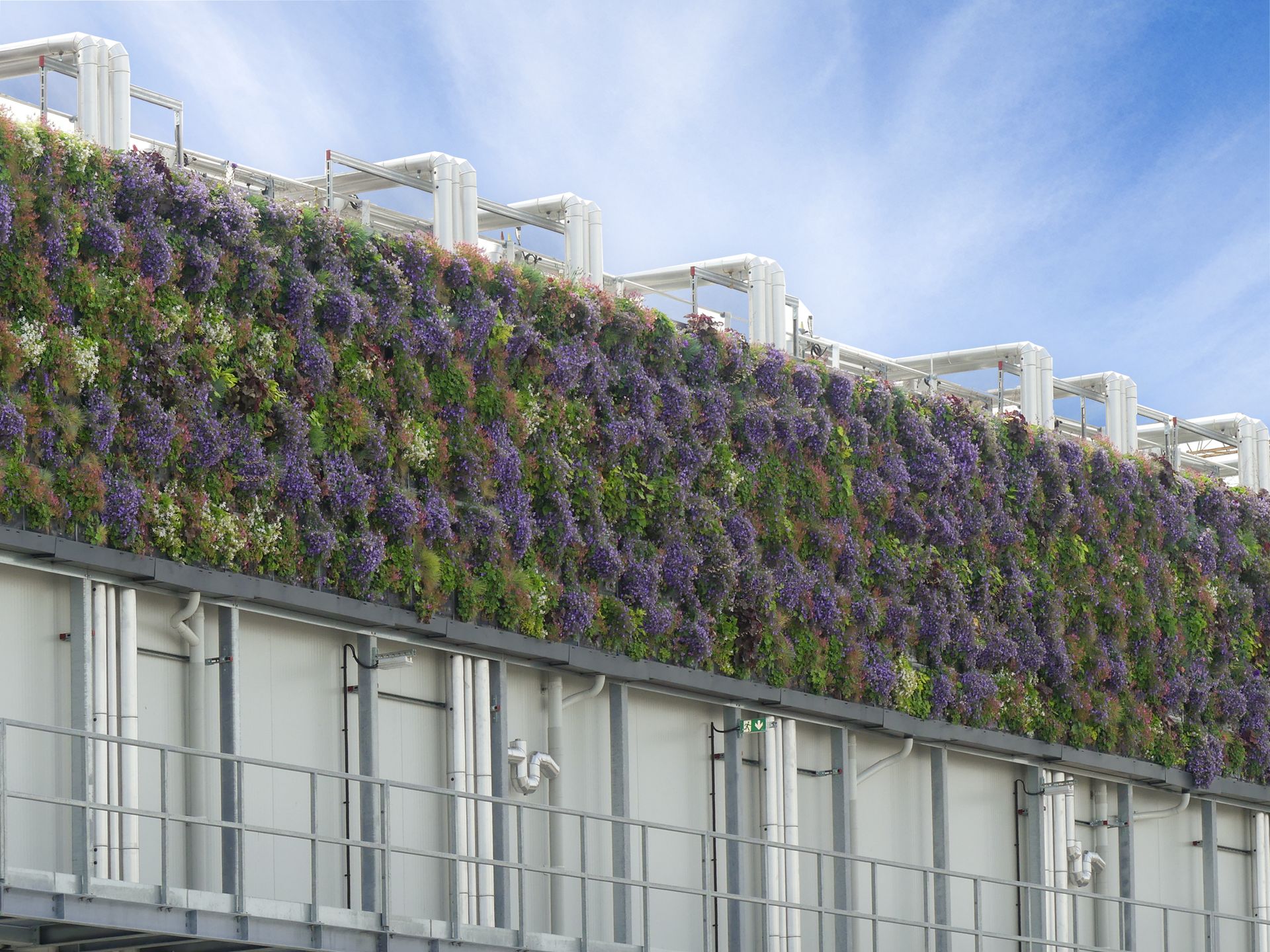
Facade or roof?
A green roof works – but hardly anyone sees it. The facade is the surface people walk past, work and live beside: cooling, shading and evapotranspiration act at eye level, where the heat builds up. And the greenery shapes the appearance of the building – with LivingPANELS from day one.
The two surfaces complement each other. In certification, wall-bound facade greening counts with a factor of 0.7 – the same as a simple intensive green roof.⁶
Impact for businesses
Greening is verifiable rather than symbolic: it counts in building certification (DGNB/ÖGNI: biodiversity-promoting area, biotope area factor, “Green Building” bonus),⁶ is subsidised in Vienna, Graz, Linz and many German cities, and with continuous monitoring delivers key figures for sustainability reports that stand up to scrutiny.
On the building itself: less solar gain on the south facade and lower cooling demand in summer⁴ – and a facade that shows what a company stands for.
Biodiversity on the building
The COP17 World Biodiversity Conference (Yerevan, October 2026) is wrestling with the 30x30 target: 30 % of land and sea areas under protection by 2030. Worldwide, the figure for land is 17.5 %; in Austria, 29 % of the territory is protected on paper, 2.9 % strictly.⁷ Protected areas alone will not reach the target – and the city is usually left out.
A green facade does not replace a protected area. But it is a surface nobody has to clear first: a site-appropriate perennial mix offers insects, wild bees and birds food and habitat⁴ – as a stepping stone between parks, courtyards and green roofs. In building certification it counts as a biodiversity-promoting area, in the biotope area factor at 0.7.⁶ Which species make sense on your building is defined by the planting plan according to location and exposure.
¹ City of Vienna, Heat Action Plan – “Folgen der Hitze für Wien”. · ² HEDWIG project (see above), infrared measurement at the reference building. · ³ Ballester J. et al. (2024), ISGlobal, Nature Medicine. · ⁴ GRÜNSTATTGRAU/BuGG “Positive Wirkungen von Gebäudebegrünungen” (2021), general values. · ⁵ Ulrich R. S. (1984): View through a window may influence recovery from surgery. Science 224. · ⁶ DGNB criterion ENV2.4 “Biodiversität am Standort” (new construction, version 2023); biotope area factor Berlin (Senate Department, as of 2019). · ⁷ ORF, “Biodiversitätskonferenz: Gordische Knoten in Eriwan” (19 Oct 2026), with data from Protected Planet, Greenpeace and WWF. General values, not system-specific.
Estimate the impact for your building.
Location, orientation and area determine the result. We put the measured values into context for your project.